




Summary
Parent-teacher collaboration creates an ongoing partnership between educators and families centered on supporting student success. By building relationships, maintaining two-way communication, and inviting families into the learning process, teachers can better understand students and work with caregivers to support student growth throughout the school year.
Key takeaways
- Parent-teacher collaboration goes beyond sharing information by inviting families and educators to exchange perspectives, set shared goals, and work together to support students.
- Creating a two-way communication loop gives families a voice in student learning and helps teachers develop shared plans based on students’ needs.
- Offering flexible ways to participate can make it easier for families with different schedules, language needs, and circumstances to stay connected to their child’s learning.
- Shared experiences such as family learning events and student celebrations can help families become more connected to the classroom and school community.
During my time in the classroom, I learned that building strong relationships with families mattered just as much as the work I did with students each day. Partnering with parents and caregivers helped me understand my students more fully. Families shared insights about their children’s interests, routines, strengths, and needs that I couldn’t gain from classroom observations alone. Together, we were able to create a support system that helped students grow both inside and outside the classroom.
Whether you’re welcoming families at the beginning of the school year or strengthening existing relationships, these parent-teacher collaboration strategies can help you build partnerships that support the whole child.
What is parent-teacher collaboration?
Parent-teacher collaboration refers to the ongoing partnership between teachers and families. It recognizes that learning takes place in many settings and that growth is strongest when educators and families work toward common goals. Although the phrase parent-teacher collaboration is commonly used, student may be supported by many different people in their lives. This can include stepparents, grandparents, guardians, foster parents, older siblings, and other caregivers. Effective collaboration welcomes all adults who a play an important role in a child’s education.
Parent communication vs. parent collaboration
Many schools communicate with families regularly through newsletters, progress reports, and classroom apps. These forms of communication help keep families informed about what is happening in school, but can often become one-way exchanges. Collaboration, however, creates a shared commitment to student success. It invites teachers and families to exchange ideas and solve challenges together to support student learning.
Imagine a teacher notices a student has become less engaged during independent reading. A communication-focused approach might involve sending an email explaining the concern. While a collaborative approach could look like asking families whether they have noticed changes outside of schools and discussing possible strategies to reengage the student.
Benefits of parent-teacher collaboration: Why is parent-teacher collaboration important?
Research shows the positive impact of strong family-school partnerships. In A New Wave of Evidence, Anne T. Henderson and Karen L. Mapp reviewed decades of research and found that when schools, families, and communities work together to support learning, students achieve at higher levels and develop more positive attitudes toward learning. Additional research by Matthew Kraft and Shaun Dougherty found that regular teacher-family communication can increase homework completion, improve classroom engagement, and strengthen student motivation. When students see the important adults in their lives working toward shared goals, they are more likely to feel supported and motivated to succeed.
These partnerships also benefit teachers by providing a more complete understanding of each learner. Families can share valuable insight into a student’s interests, strengths, cultural and linguistic background, responsibilities outside of school, or experiences that may influence learning. This broader perspective helps teachers make more informed instructional decisions and respond to students’ individual needs. Ongoing collaboration also creates opportunities to celebrate progress together and address challenges before they become barriers to success.
Families and caregivers benefit from collaboration as well. Regular communication helps them better understand classroom expectations, learning goals, and their child’s progress while providing opportunities to share their own perspectives and ask questions. When families feel respected and included as partners, they are better equipped to support learning outside of school and advocate for their child.
How to collaborate with parents and caregivers as a teacher
Family partnerships can be established within the first few weeks of school and nurtured throughout the school year. Here are some ways to collaborate with parents and caregivers.
Start with positive connections
A quick email or phone call celebrating a student’s kindness or growth lets families know that you recognize their child’s strengths. These interactions help establish a positive relationship, making future conversations about challenges feel more collaborative.
Learn from families
Families can offer valuable insight that helps teachers better understand each student, including their interests, strengths, and experiences outside the classroom. Inviting families to share this information gives teachers a more complete picture of each learner while reinforcing that caregivers are valued partners in their child’s education. One way to gather these insights is by sending a family or caregiver questionnaire at the beginning of the school year. Consider following up with additional check-ins throughout the year as students grow, interests evolve, or circumstances change.
Stay connected throughout the year
Look for regular opportunities to connect through classroom updates, emails, or brief check-ins. Ongoing communication helps families stay informed while creating opportunities to celebrate successes and address concerns.
Best practices for teacher-parent collaboration
Strong partnerships are built over time through consistent communication and intentional relationship-building. While there is no single approach that works for every family, these best practices can help you better work alongside families.
Build relationships through everyday interactions
Simple gestures such as greeting families at arrival or dismissal, responding promptly to questions, and sharing positive updates help build lasting relationships. These interactions communicate that families are welcome partners in their child’s education, not just participants during scheduled events.
Honor families’ backgrounds and experiences
Every family brings unique experiences, cultures, and perspectives to the school community. Creating a welcoming environment means recognizing those differences and ensuring every caregiver feels respected. When possible, provide translated materials, offer interpretation services during meetings, and invite families to share traditions or experiences.
Set shared goals for student success
Working toward shared goals helps teachers and families support students with consistency and purpose. Regularly revisiting those goals creates opportunities to recognize progress and address new challenges.
How to create a collaborative parent-teacher communication loop
A communication loop involves establishing a consistent cycle of sharing information between you and families. The following steps can help you build ongoing communication between you and your students’ families.
1. Start with a positive connection
Begin the relationship by introducing yourself and sharing something positive about the student. Starting with strengths helps build trust and establish a foundation for future conversations.
2. Share observations regularly
Keep families informed about student learning through brief updates that highlight progress, classroom experiences, or areas where additional support may be beneficial. Regular communication helps families stay connected without waiting for conferences or report cards. These updates can be shared through email, in-app messaging, communication folders, or notes in a student agenda, depending on what works best for your classroom and families.
3. Invite family input
Communication should be a two-way conversation. Ask families what they are noticing, whether they have questions, or if there are experiences outside of school that may be influencing their child. Their perspective provides valuable context that can inform instructional decisions.
4. Develop a shared plan
When a student needs additional support or is working toward a goal, collaborate with families to identify practical strategies that can be reinforced across learning environments. Agree on clear next steps so everyone understands how they can contribute to the student’s success.
5. Follow up and celebrate progress
Check in regularly to share updates, recognize growth, and adjust strategies as needed. Following up demonstrates that collaboration is an ongoing partnership and reinforces that teachers and families are working together toward the same goal.
By repeating this cycle throughout the school year, communication becomes more than an exchange of information. It becomes a collaborative partnership built on trust, shared responsibility, and a commitment to helping every student grow.
Parent-teacher collaboration activities and ideas
Creating shared experiences can help families feel welcomed into the classroom and connected to the school community. Here are a few ways to bring families into their child’s learning experience.
Family literacy nights
Family literacy nights invite students and their families to explore reading together through interactive activities. Teachers might model read-aloud strategies, introduce families to grade-level books, demonstrate questioning techniques that support comprehension, or share simple literacy activities that can be continued at home. These events help families feel more confident supporting reading.
Student portfolio celebrations
Portfolio celebrations give students the opportunity to showcase their learning throughout the year. Instead of reviewing grades alone, students share writing samples, projects, artwork, assessments, and reflections that demonstrate their growth over time. Families gain a richer understanding of their child’s progress, while students develop ownership of their learning by explaining their accomplishments and future goals.
Math game nights
Math game nights help families experience mathematics as an engaging, collaborative activity. Teachers can introduce hands-on games that reinforce grade-level concepts, model problem-solving strategies, and demonstrate how everyday activities can build mathematical thinking. Families leave with practical ideas they can easily incorporate into learning outside of school.
Cultural showcases
Cultural showcases, such as multicultural fairs, celebrate the backgrounds, languages, and experiences represented within the school community. Students and families might share music, stories, artwork, food, or cultural traditions that are meaningful to them. These events create opportunities for families to contribute their knowledge and experiences while helping students develop greater appreciation of other cultures within their school.
Ways to create more opportunities for parent-teacher collaboration
Not every family can volunteer during the school day or attend evening events, but nearly every family wants opportunities to support their child’s education. Schools can create more accessible pathways for engagement by offering a variety of options, such as virtual information sessions, student-led conferences, family learning nights, classroom celebrations, or home activities connected to classroom learning. Flexibility is key. Offering multiple ways to participate acknowledges the different schedules and circumstances families may have while reinforcing that every form of engagement is valuable.
Parent-teacher collaboration checklist
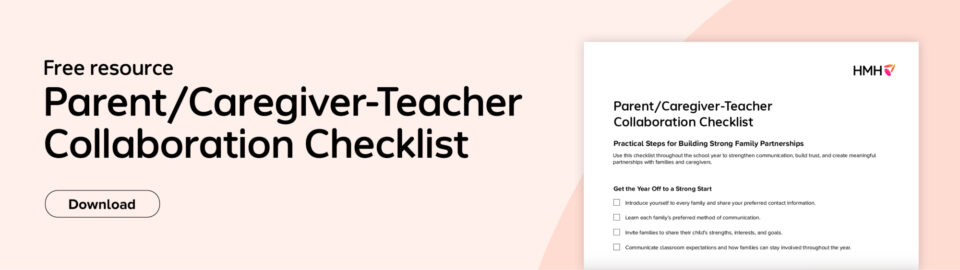
To help teachers build consistent partnerships throughout the year, consider downloading our Parent-Teacher Collaboration Checklist, which includes practical reminders for welcoming families, maintaining two-way communication, celebrating student growth, and strengthening relationships from the first day of school through the last.
What a strong teacher and parent partnership looks like in practice
In the classroom, strong collaboration can begin with a simple conversation that helps you and the families you serve better understand how to support a student. I saw this firsthand in my first-grade classroom. I noticed that my once-bubbly student had begun to shy away from classroom discussions. Instead of waiting until the next scheduled conference, I called her mom to share what I had observed. During our conversation, she explained that the family was going through a significant transition at home: the student’s parents had recently separated. With this added context, her mom and I worked together to find ways to rebuild the student’s confidence both at school and at home. Throughout the year, we stayed in touch to discuss her progress, adjust our approach as needed, and celebrate the positive changes we saw.
This is just one example of how family-teacher partnerships can look in practice. Every situation is different, but strong collaboration allows you to respond to each family’s needs and provide the support your students need to succeed.
Common challenges to effective collaboration
Collaborating with families may come with challenges, including circumstances that are beyond a teacher’s or a school’s control. Approaching these challenges with flexibility and empathy can help you turn potential barriers into opportunities to strengthen family-teacher relationships.
Busy schedules
Many families balance work schedules, caregiving responsibilities, or extracurricular commitments, making it difficult to attend school events or meet during traditional school hours. Offering flexible meeting times, virtual conference options, recorded informational sessions, or multiple opportunities to connect throughout the year helps make collaboration more accessible for all families.
Language differences
When families and educators do not share a common language, important information can be misunderstood. Language barriers may also discourage families from asking questions or participating in school events. Schools can strengthen partnerships by providing translated materials, using qualified interpreters during meetings, and communicating in families’ preferred languages whenever possible.
Transportation barriers
For some families, attending conferences and school events may be limited by transportation challenges, distance from school, or access to reliable childcare. Schools can reduce these barriers by offering virtual participation options or scheduling events alongside other school activities.
Limited access to technology
Although many schools rely on digital communication platforms, not every family has reliable internet or a personal device. Important messages sent exclusively through email or classroom apps might not reach some caregivers. Using multiple communication methods, including phone calls and printed materials, helps ensure families receive timely information in ways that work best for them.
Parent-teacher collaboration quotes
The following quotes serve as reminders that supporting students is a shared responsibility between schools and families. Consider displaying them in classrooms, conference spaces, or family resource centers.
"Alone we can do so little; together we can do so much.”
— Helen Keller
"Coming together is a beginning, keeping together is progress, working together is success.”
— Henry Ford
“I can do things you cannot, you can do things I cannot; together we can do great things.”
— Mother Teresa
Working together to support students
The most effective parent-teacher collaboration strategies begin with a simple belief that families and caregivers are not visitors in the educational process; they are essential members of the learning team. By investing in authentic partnerships throughout the school year, schools can create learning communities where every student is supported by the adults who know and care for them.
***
Learn about how our approach to instructional coaching can support teachers in meeting their professional goals with HMH Coachly.
Find more lesson plans and classroom resources on Shaped.
Be the first to read the latest from Shaped.